August 2026 - The Clinical Edge
Sepsis, AI Sepsis Monitor, FDA 510(k) Clearance, Medical Device Regulation

It is one of cinema's most famous lines about the agonizing passage of time. In a medical malpractice case involving sepsis, hours—and even minutes—can feel like an eternity to a declining patient. Every single hour of delayed treatment drops a patient's survival rate by up to 8%.
How Continuous AI Sepsis Monitoring Is Reshaping Clinical and Legal Evaluation Timelines
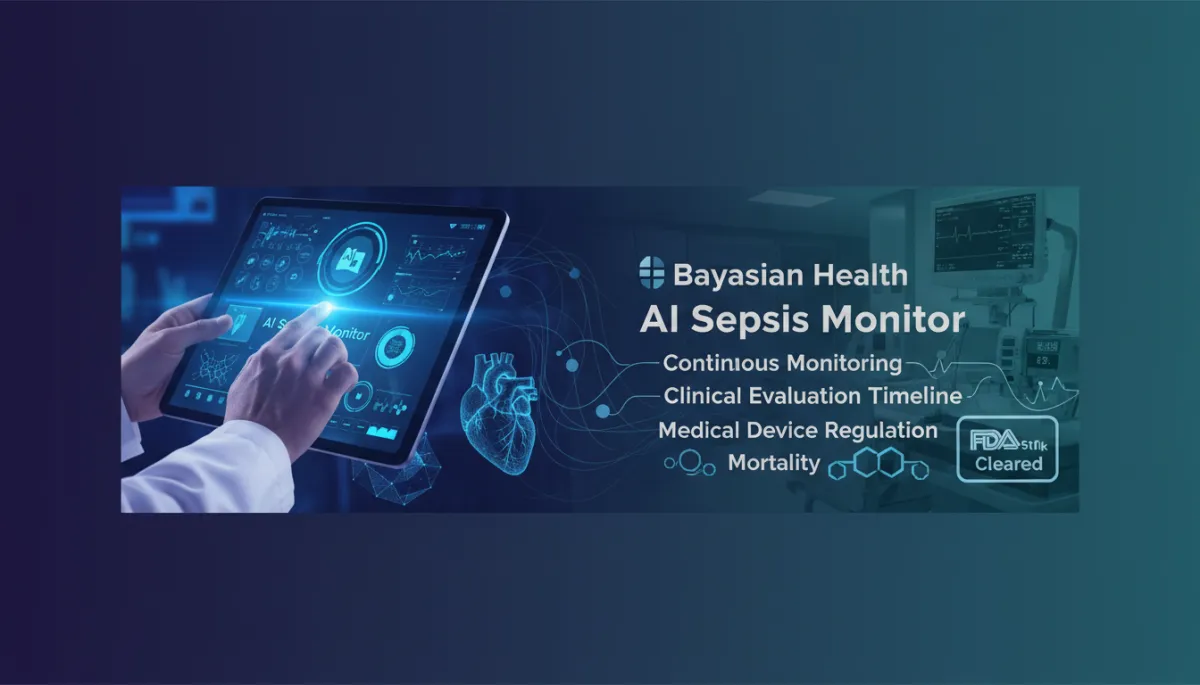
The FDA’s 510(k) clearance of Bayesian Health’s Sepsis Flagging Device marks a pivotal shift in how clinicians and regulators evaluate sepsis care, medical software, and liability. As the first-ever continuous AI sepsis monitor authorized as a regulated software medical device, it is redefining expectations for clinical performance, documentation, and risk management across the care continuum.
A New Era: FDA 510(k) Clearance for the Bayesian Health Sepsis Flagging Device
On April 30, 2026, the U.S. Food and Drug Administration granted 510(k) clearance (K250680) to the Bayesian Health Sepsis Flagging Device, determining it to be substantially equivalent to its predicate, the Sepsis ImmunoScore (De Novo DEN230036) (FDA Premarket Notification Database). This decision formally recognizes the system as an AI/ML-based Software as a Medical Device (SaMD) that continuously analyzes electronic health record (EHR) data to identify patients at risk of developing sepsis within 24 hours, outputting a “Sepsis Risk High” flag inside the EHR for clinicians to act upon.
In May 2026, Bayesian Health announced that this clearance established the device as the first-ever continuous AI sepsis monitor authorized through the FDA 510(k) pathway, a milestone that elevates the standard for AI-driven early warning tools in acute care (PR Newswire).
What Makes This AI Sepsis Monitor Different?
Unlike traditional sepsis screening tools that rely on periodic vital sign checks or static scoring systems, the Bayesian Health AI Sepsis Monitor operates as a truly continuous monitoring platform. Built on the TREWS (Targeted Real-Time Early Warning System) architecture, it ingests high-dimensional EHR data—labs, vitals, medications, and clinical notes—to update risk estimates in real time throughout a patient’s stay.
Clinical studies across multiple health systems, including the Cleveland Clinic network, have shown that when clinicians respond to these alerts, hospitals can achieve 18–19% relative reductions in sepsis mortality and initiate antibiotics hours earlier than usual care (Stanford AI Index 2026; PR Newswire). Retrospective validation submitted to the FDA reported a per-patient positive percent agreement of 79.4% and a negative percent agreement of 89.5%, underscoring robust performance at scale.
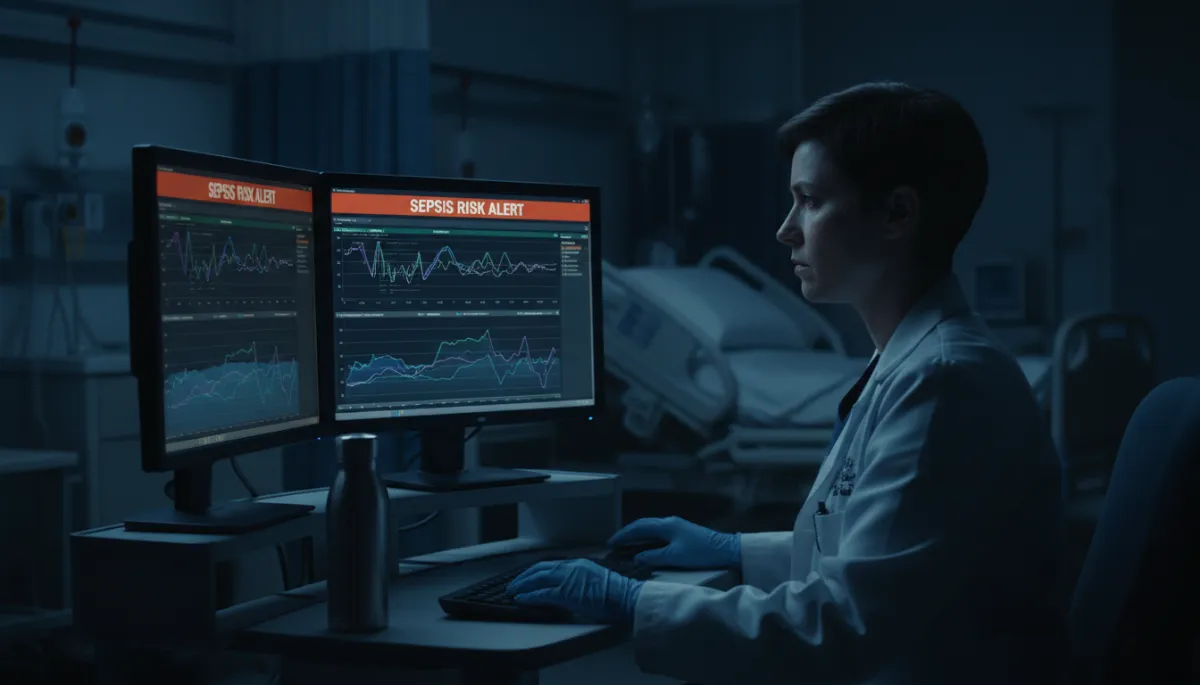
Timely action on AI sepsis alerts has been linked to double-digit reductions in mortality.
How the FDA 510(k) Process Reshapes the Clinical Evaluation Timeline
The clearance of this device illustrates how the clinical evaluation timeline for high-risk software is evolving under modern medical device regulation. While the traditional pathway for devices includes discovery, preclinical testing, clinical investigation, and post-market surveillance, the Bayesian Health submission highlights several shifts particularly relevant to AI:
Extensive real-world retrospective data: More than 7,700 hospital encounters were analyzed to demonstrate safety, effectiveness, and generalizability, compressing years of prospective observation into a rigorous data package (Innolitics FDA summary).
Human factors and usability testing: The clinical evaluation no longer focuses solely on algorithm accuracy; it now formally assesses how clinicians interpret alerts, integrate them into workflows, and avoid alert fatigue.
Post-market performance management: As with EU MDR expectations for continuous clinical evidence, the FDA clearance includes a post-market performance plan to monitor degradation, cybersecurity, and safety in real time, effectively extending the clinical evaluation timeline far beyond the initial 510(k) decision.
For hospitals, this means the “trial period” for such tools is no longer confined to a discrete study window. Continuous performance monitoring, periodic model reviews, and updated clinical evaluation reports are now expected elements of responsible deployment.
The Legal Timeline: Standard of Care, Documentation, and Liability
The legal landscape around sepsis care has long been shaped by questions of timeliness: How quickly were symptoms recognized, how rapidly were antibiotics administered, and were institutional protocols followed? With a regulated continuous AI sepsis monitor now available, the clinical and legal timeline for evaluating these cases has permanently changed.
Because the Bayesian Health system is cleared as a software medical device, its alerts, timestamps, and audit trails become part of the medical record and, by extension, part of the evidentiary record in malpractice litigation or regulatory review. Key implications include:
Earlier “clock start” for recognition: In a sepsis-related mortality case, the timeline may now be measured from the moment the AI system issued a “Sepsis Risk High” flag, not just when a clinician first documented concern.
Expectations for response: If an FDA-cleared AI monitor repeatedly flags high risk and no timely action is taken, plaintiffs may argue that the standard of care was not met, especially as such tools become widely adopted and embedded in guidelines or payer policies.
Shared accountability: The presence of a regulated device with defined indications, limitations, and instructions for use also clarifies the responsibilities of manufacturers, hospitals, and clinicians. Failure to configure the system correctly, train staff, or maintain post-market monitoring could all become focal points in legal evaluations.
How it impacts the Plaintiff...
Establishes Pre-Clinical Notice: Because the device tracks subtle data shifts before visible symptoms appear, an unaddressed flag proves the hospital had an objective, early warning of deterioration.
Defeats the "Alert Fatigue" Defense: Traditional systems suffer from massive false-alarm rates. Bayesian's high-precision clinical validation study (covering over 7,000 patients) proves it operates at a level of precision clinicians can actually trust, severely undermining the argument that a provider was justified in ignoring it.
Proves Deviation from standard benchmarks: Data shows that acting on these specific alerts correlates with an 18% reduction in hospital mortality. Failing to investigate an alert means failing to utilize a validated, life-saving clinical tool.
Creates a Clear Metadata Trail: The system records exactly when a flag was generated, when it was viewed, and what orders followed, giving you an undeniable digital blueprint of delay.
How it impacts the Defense...
Proves Atypical Progression: Sepsis affects roughly 1.7 million Americans every year. If the AI—which continuously scans the entire EHR—failed to fire a flag, it provides objective evidence that the patient's presentation was entirely atypical and clinically unpreventable.
Demonstrates Proactive Compliance: If the clinician logged into the EHR and responded to the flag within a reasonable timeframe, you can visually demonstrate to a jury that the provider was highly attentive and actively managed the risk.
Defends Systemic Constraints: If the system failed to flag due to delayed laboratory processing times rather than doctor error, liability shifts away from the individual provider toward technical or systemic dependencies.
Mortality, Outcomes, and the Emerging Standard of Care
Sepsis remains a leading cause of in-hospital mortality worldwide. Continuous AI monitoring directly targets the most litigated aspect of sepsis care: delays in diagnosis and treatment. Evidence from TREWS deployments shows that when clinicians engage with alerts, patients receive antibiotics earlier, experience fewer ICU transfers, and have lower death rates (Stanford AI Index 2026).
As these results are replicated and reinforced by post-market data required under modern medical device regulation, continuous AI sepsis monitoring is poised to influence what courts, regulators, and payers regard as the “reasonable” standard of care for high-risk hospitals. Over time, not having such a system—or failing to use it effectively—may be increasingly difficult to justify when preventable deaths occur.
Preparing Hospitals for the New Clinical and Legal Reality
For health systems, the path forward involves more than just purchasing an AI tool. To keep pace with the new clinical evaluation timeline and mitigate legal risk, organizations should:
Integrate AI sepsis alerts into standardized sepsis bundles, escalation pathways, and rapid response protocols, with clear expectations for response times and documentation.
Establish multidisciplinary governance, including clinicians, quality leaders, risk managers, and legal counsel, to oversee device configuration, performance monitoring, and policy updates.
Align internal policies with FDA labeling, post-market performance plans, and evolving guidance on AI/ML-enabled medical devices to ensure compliance and defensible practice.
📌 Key Takeaway: With FDA-cleared continuous AI sepsis monitoring now available, both clinical leaders and legal teams must treat AI alerts as time-stamped, auditable events that can materially influence outcomes—and liability—in sepsis care.
The Bayesian Health Sepsis Flagging Device does more than detect sepsis earlier. By securing FDA 510(k) clearance as a continuous AI sepsis monitor, it has reset expectations for how quickly clinicians can recognize deterioration, how regulators evaluate software medical devices, and how courts and payers will judge the preventability of sepsis-related mortality in the years ahead.
You can no longer rely solely on basic nursing notes and standard physician charting to establish a timeline. To win or defend a sepsis case in this new era, you must request the complete EHR audit logs and AI metadata to determine if a continuous monitoring device was active.
As your Legal Nurse Consultant, we can screen your medical records, decipher complex algorithmic audit trails, and pinpoint the exact minute liability attached to the timeline.
Send us an email:
Give us a call or text:
(702) 482-9769